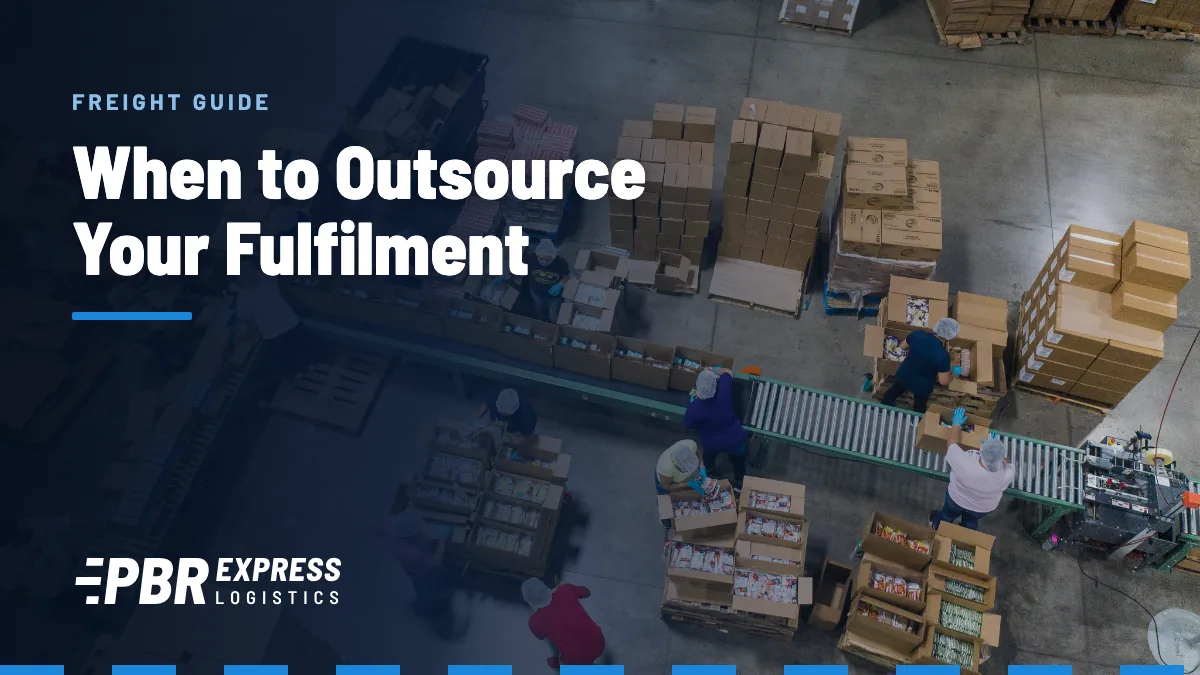
It’s time to outsource warehousing and fulfilment when packing orders eats your working week or your stock outgrows your space. A third-party logistics (3PL) provider stores your products, then picks, packs and dispatches each order. This guide covers the signs, the costs to compare, the questions to ask and how to get ready.
Signs it’s time to outsource warehousing and fulfilment
Most small stores start by packing orders at home, in a garage or out the back of a shop. That works until one or more of these problems appears.
- You’re running out of space. Cartons fill the spare room, garage or office, and there’s no room for bulk buys.
- Packing eats hours every week. Printing labels, taping boxes and dropping off parcels takes time away from sales, products and customers.
- Orders keep growing. A routine that handled a few orders a day starts to crack as volumes rise.
- Seasonal peaks swamp you. Christmas, sale events and end-of-financial-year promotions can bring more orders than you can pack by hand.
- Picking errors creep in. Wrong sizes, wrong colours and missing items lead to returns, refunds and poor reviews.
- Dispatch is slowing down. Orders wait a day or two to leave, and customers start asking where they are.
One sign on its own may not justify the change. Two or three together usually mean it’s worth getting quotes.
What a fulfilment service usually covers
Services vary between providers, but most fulfilment arrangements follow the same basic steps.
- Receiving: stock arrives from you or your supplier, then it’s counted, checked and put away.
- Storage: products are held on pallets, on shelves or in cartons until they’re ordered.
- Pick and pack: when an order comes in, the right items are picked and packed to your rules.
- Dispatch: the order is labelled and handed to a courier or carrier for delivery.
- Returns, if offered: returned items are received, checked, then restocked or set aside.
Returns deserve a close look. Outsourcing the physical work doesn’t hand over your obligations to customers. Under the Australian Consumer Law, customers can choose a refund or replacement for goods with a major problem. A store policy can’t override those rights, so agree how your provider checks and reports returns.
Doing it yourself vs outsourcing
Here’s how the two approaches compare for a small online store.
| Factor | Doing it yourself | Outsourcing to a 3PL |
|---|---|---|
| Space | Limited to your home, garage, shop or office | Storage can grow or shrink with your stock |
| Your time | Hours each week packing and dropping off parcels | Time freed for sales, sourcing and customer service |
| Costs | Mostly hidden: your hours, rent, packaging and trips | Clear line items on an invoice |
| Peak periods | Longer days, or orders fall behind | The provider takes on the extra volume, subject to its capacity |
| Accuracy | Depends on how busy and tired you are | Depends on the provider’s systems and checks |
| Control | Hands-on with every order | Less direct contact, so clear rules matter |
| Best suited to | Low, steady volumes and a short product range | Growing volumes, more products or seasonal spikes |
The cost items to compare
Fulfilment pricing is usually split into separate charges. Ask each provider to quote the same items so you can compare like with like.
- Storage: often charged per pallet, shelf or carton, by the week or month.
- Receiving: some providers charge to unload and check incoming stock.
- Pick and pack: commonly a fee per order, plus a fee for each extra item.
- Packaging: boxes, satchels, void fill and tape, supplied by you or the provider.
- Delivery: Australia Post typically charges on the greater of cubic weight or actual weight. Many carriers work in a similar way, so check with yours.
- Extras: returns handling, account set-up, minimum monthly charges and contract terms.
To compare fairly, write down a normal week: orders, items per order, and pallets or cartons in storage. Then add your busiest week. For example, a small skincare store might send 60 orders in a normal week and 200 before Christmas. Give every provider the same numbers and compare the totals, not the headline rates.
Cost your own time too. Count packing hours, the space you pay for, packaging bought in small lots and trips to drop off parcels.
Questions to ask a fulfilment provider
Ask each provider the same questions, then compare the answers side by side.
- How soon after delivery is new stock counted and ready to sell?
- What is the daily cut-off for orders to be dispatched that day?
- How will I see stock levels and order status?
- How do you check for picking errors, and who pays to fix a mistake?
- Which delivery options can my customers choose from?
- How do you handle returns, and how will you report them to me?
- Are there minimum volumes, lock-in contracts or notice periods?
- How do you manage peak periods such as Christmas?
- Can I visit the warehouse and see how my stock is stored?
Ask for the key answers in writing as part of your service agreement.
How to prepare: a readiness checklist
A provider can only work with the information you give it. Tick off these items before you move any stock.
- Product list with SKUs: give each product and variant its own SKU (stock keeping unit, your internal product code). A size M shirt needs a different SKU from a size L.
- Barcodes or clear labels: every unit needs a scannable barcode or a clear label that matches your product list. GS1 Australia describes a barcode number (GTIN) as a unique number for your product, anywhere in the world. Many online marketplaces ask for one.
- Sizes and weights: record each item’s dimensions and packed weight. They drive delivery costs, as this guide to what cubic weight is explains.
- Order volumes: note your normal week, your busiest week and the average items per order.
- Packaging rules: state which box or satchel suits each product and how to protect fragile items. This guide on how to package parcels covers the basics.
- An accurate stock count: count what you hold so both sides start with the same numbers.
- Returns rules: decide whether returned items are restocked, set aside or sent back to you.
- Order handover: agree how orders reach the provider, such as from your store platform, a spreadsheet or email.
Why a local provider can suit Newcastle businesses
For a Newcastle store, a warehouse nearby has some practical advantages.
- Shorter trips: dropping off new stock or collecting items is a short drive, not a long round trip.
- Easy visits: you can check how your products are stored and packed, and fix problems face to face.
- Same-day local delivery options: stock held nearby can reach local customers quickly by same-day courier.
- Simpler inbound stock: supplier pallets and bulk cartons can come by road freight straight to the warehouse.
How PBR Express Logistics can help
From Birmingham Gardens, Newcastle, we offer warehousing and fulfilment: pallet and carton storage, plus pick, pack and dispatch. We also run same-day courier and road freight jobs, one-off or regular. Send your product list and order volumes through our quote form. Every job is quoted first, and the price is confirmed before pick-up.
FAQs
What is a 3PL?
A 3PL, or third-party logistics provider, is an outside business that handles part of your logistics. For an online store, that usually means storing stock, picking and packing orders, and sending them to customers.
How many orders do I need before outsourcing makes sense?
There’s no set number. Weigh your packing hours, the space you use and the cost of errors or delays against a provider’s quote. If doing it yourself costs more, outsourcing is worth a closer look.
Do I lose control of my stock if I outsource?
You hand over the day-to-day handling, not ownership. Ask how you’ll see stock levels and order status, and set clear packing and returns rules. A local provider also makes it easy to visit and check your stock in person.
Who handles customer returns when fulfilment is outsourced?
If the provider offers returns handling, it can receive and check returned items for you. You still own the relationship with your customer and their consumer guarantee rights. Agree in advance how returns are inspected, restocked and reported.